
About the service
Imagine that the energy you produce does not end at the meter. The rights attached to it can be recorded digitally, if the model and the law allow it.
The requirements depend on the rights the token gives: a right to revenue from energy sales is usually a financial instrument, so a MiCA white paper alone is not enough.
What is energy tokenization and how does it work in practice?
Energy tokenization consists of digitally representing electricity, or the rights attached to it, in the form of tokens recorded on a blockchain.
A token can represent:
- a specific quantity of generated energy,
- a right to revenue from the sale of energy,
- a share in a renewable energy project,
- access to energy over a defined period.
The token is not electricity. It is a digital record of a right that can be transferred, settled and automated using smart contracts.
What we tokenize
Energy and climate assets differ in where their value comes from and in the right the token carries: sometimes it is an instrument against a project company, sometimes a receivable under a contract, and sometimes a digital record of a certificate kept in an external registry. For each asset type we separately establish what drives its value, what the token represents and which data must be controlled. If the token qualifies as a security, we prepare the issuance as an STO; financial assets outside the energy sector are covered under RWA tokenization.
Generation and infrastructure
Solar farms
Installed capacity is not a revenue forecast. The outcome depends on irradiation, degradation, curtailment, grid connection terms and the energy sales model: PPA, auction or merchant exposure. The token usually represents a right against the farm's SPV or a share in its cash flows, not ownership of the panels; during construction, tranches may depend on EPC, grid connection and acceptance milestones. Land rights, permits, meter data and grid restrictions, as well as senior debt, DSCR and maintenance reserves must be controlled. Guarantees of origin are a separate right and are not part of the token by default.
Wind farms
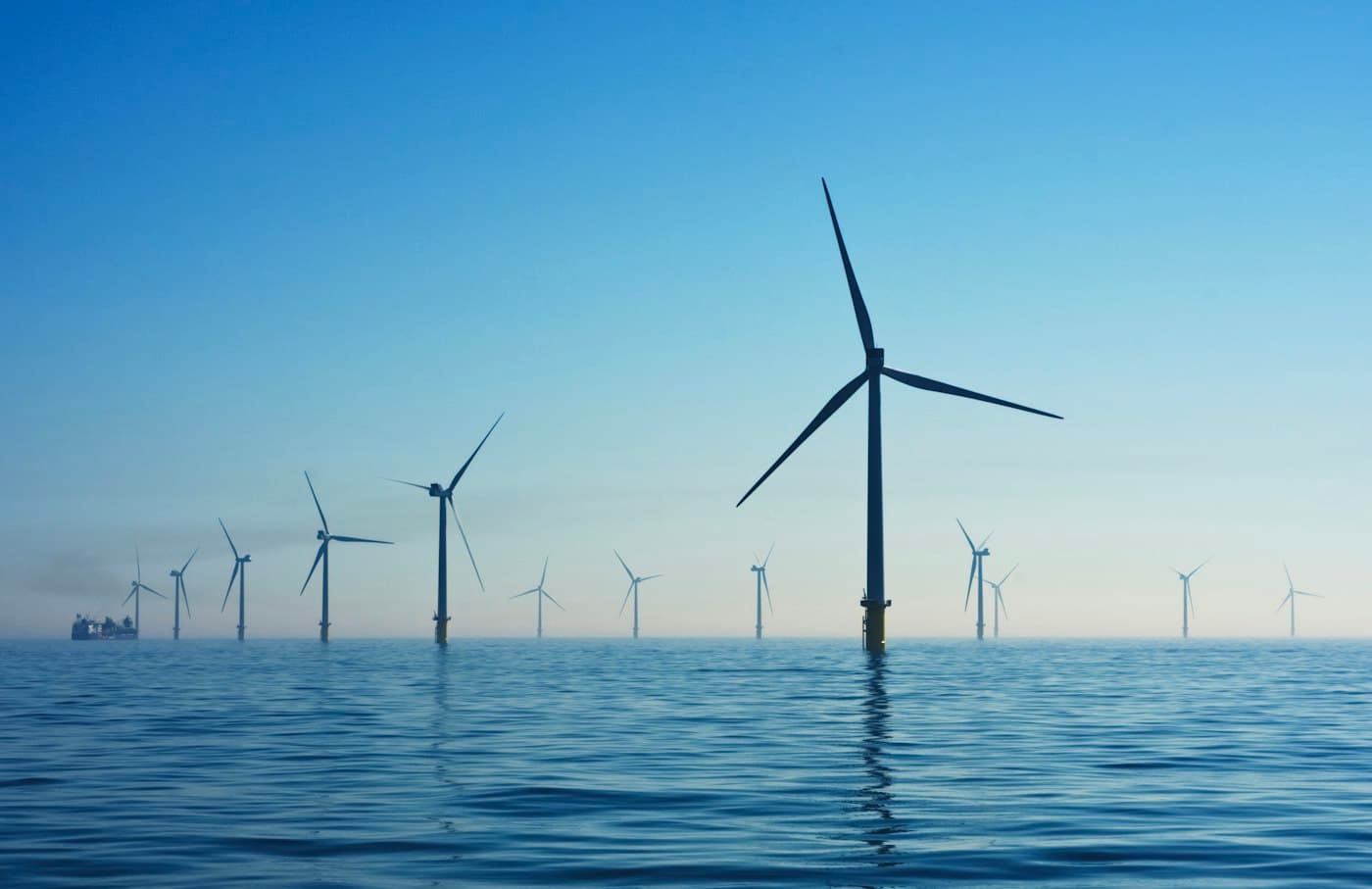
Risk before permitting, during construction and after COD is different, so each phase requires its own financing terms. Once operational, revenue depends on the wind profile, turbine availability, wake losses, curtailment and the cost of major components. The token most often represents a right against the SPV financing or owning the project; it confers no right to the land or the turbine. Site rights and environmental decisions, grid connection terms, an independent wind resource assessment (P90 scenario), turbine warranties, the O&M contract and a component reserve must be controlled; production data comes from SCADA.
Energy storage
A storage system (BESS) has no single revenue stream: price arbitrage, the capacity market and ancillary services compete for the same capacity, so every MWh and MW must be assigned to one service. The result depends on cycles, degradation, availability and the dispatch strategy of the EMS operator or aggregator. The token confers no right to a specific battery; it is tied to an instrument against the SPV and its cash flows, and the waterfall accounts for aggregator fees, servicing, an augmentation reserve and debt service. Power, usable capacity and C-rate limits, the degradation warranty and the licence that the Polish regulator (URE) indicates for storage above the statutory threshold must be controlled.
Energy projects
A generation farm, a storage system, charging infrastructure or an efficiency project have different revenue sources, licences, data and counterparties. When the technology or financing model has not yet been chosen, the entry point is discovery: a map of the asset, SPV, contracts, data and risks, followed by the choice of instrument, financing gates and waterfall. The stage ends with a recommended structure or a reasoned no-go when control over the asset, grid connection, data or offtake is missing.
EV charging infrastructure
The token represents a share in the financing of the equipment, in the SPV or in the revenue of a designated network of charging points. The sources of truth are the charger register, site agreements, the CPO backend (OCPP), session data, energy meters and payment settlements; completed sessions are reconciled with metered kWh and payment, and revenue net of energy, roaming, servicing and lease costs feeds the waterfall. Device and site identity, uptime and the procedure for replacement or loss of a site must be controlled. Legally, the qualification of the instrument, energy and metering regulations, roaming agreements, data protection and state aid need to be examined.
Energy, contracts and certificates
Energy units
A single MWh appears simultaneously in metering, in the supplier's settlement, in balancing and in the guarantees of origin system, so a token without a clearly defined purpose leads to double allocation or a false promise of physical delivery. A digital unit contains a time interval, metering point, energy type, validation status and purpose; minting takes place after the data has been approved by the operator or an accredited source. The model makes sense for a closed settlement programme, an energy community or an aggregator. The token is a record-keeping layer: a transfer alone does not direct energy in the grid and does not replace a licence or a guarantee of origin.
PPA contracts
The token represents a right or exposure under a specific, signed PPA: volume, price, profile and delivery period. The amount due follows from the PPA documents and approved market data: the volume metered by the operator is compared with the contractual profile, deviations and the reference price. Contract and amendment versioning, the handling of imbalance, non-delivery and curtailment, and the offtaker's credit risk must be controlled; the model involves the generator, the offtaker, the supplier or balancing party, the metering operator and the settlement agent. A PPA is an energy contract, but depending on its design the token may create a financial instrument, so an analysis of energy, financial and contract law is required.
Guarantees of origin
Under the RED directive, a guarantee of origin is electronic proof that energy was produced from renewable sources, issued and cancelled in a national registry. The token is a digital representation of the status of an existing guarantee, not a second parallel certificate: it may be issued or updated only on the basis of a registry entry, and its use ends with a synchronised cancellation. The required controls are one-to-one mapping to the guarantee number, verification of the owner and status before transfer, atomic cancellation of the token and the registry entry, and a block on reuse of the same MWh; integration with the registry is a precondition.
Renewable energy certificates
The meaning of a certificate depends on the programme and jurisdiction, so the first control is identifying the standard; guarantees of origin, RECs and other instruments from different jurisdictions cannot be combined in a token as equivalent. The token is a digital record of a specific certificate: the certificate is locked in the programme registry before on-chain representation, and the use of the environmental claim ends with retirement in the same system, attributed to the beneficiary. The sources of truth remain the programme registry, installation identifier, production period, volume, owner and retirement status; renewable energy claims must match the scope of the certificate and its effective retirement.
Climate and CO₂
Carbon credits
The biggest risk is not the smart contract but credit quality and double counting: a token does not improve additionality, baseline or permanence, though it can improve traceability. The token is linked to a specific serial number in a recognised registry, and its metadata indicates the programme, methodology, project and vintage; a bridge locks the source unit before minting, and burning the token triggers retirement in the registry with proof of the end beneficiary. The right to dispose of the credit, the programme rules (not every programme allows tokenization) and the rules of offset communication must be verified: holding a token alone does not justify a climate neutrality claim.
CO₂ removal and biochar
The token represents a verified CO₂ removal unit from a designated project and biochar batch. The unit is created only after process measurement, a carbon balance and verification by an independent VVB, and the sale of the claim ends with retirement attributed to the buyer and purpose; issuance against forecast removals without an audit is a stop signal. Traceability of biomass and batches, permanence analysis, and the buffer and reversal procedure must be controlled. The EU CRCF framework and voluntary standards require a methodology, additionality and monitoring; the token itself is not a removal certificate.
Forestry projects
The token represents a right connected with the financing of a forestry project or verified climate units, but not the forest itself without a defined legal title. Financing, issuance and the sale of units are separated: a unit token is created after verification, and the buyer's claim after retirement. The sources of truth are the land register, the forest management plan, satellite and field data, the VVB report and the unit registry. Plot geolocation and legal title, baseline, additionality and leakage, monitoring of fire, logging and permanence, and the buffer pool and reversal procedure must be controlled; the carbon standard or CRCF defines measurement, permanence and claims.
Electricity tokenization in a business model
In practice, energy tokenization works best in projects involving:
- photovoltaics,
- wind power,
- biogas,
- energy storage,
- local energy clusters.
The assets most often tokenized are:
- future cash flows from energy,
- shares in energy projects,
- rights to a defined pool of energy.
As a result, energy stops being merely a cost or a product. It can become an asset, but whether it can be financed depends on the model, the regulatory path and the documents.
How does energy tokenization work step by step?
1. Analysis of the energy project
We check exactly what is to be tokenized and whether the model makes economic and regulatory sense.
2. Tokenomics design
We define:
- what the token represents,
- how it is linked to energy or revenue,
- how investors obtain their benefits,
- how issuance and distribution work.
3. Legal structure and compliance
Energy tokenization must take into account:
- energy law,
- MiCA or the rules on financial instruments and offerings, depending on the token's rights,
- AML and KYC,
- potential tax obligations.
We combine this stage with our legal and regulatory compliance service.
4. Technology and token issuance
We build smart contracts, issuance infrastructure and a settlement system, much like in ICO and IDO projects, but tailored to the energy market.
5. Communication and investor relations
The issuer publishes communications in its own name. We support issuance communication, PR and community through our token marketing service, based on data and transparency, for a fixed fee.
Benefits of energy tokenization
Electricity tokenization provides:
- an orderly record of rights to energy or revenue,
- the ability to tie financing to project stages,
- automated settlements,
- greater transparency for investors,
- smaller units, if the offering regime allows it.
This depends on the model and the documents. Tokenization does not ensure financing or a return.
Risks of energy tokenization
Energy tokenization, like any investment model, involves risks:
- incorrectly designed tokenomics,
- non-compliance with energy law,
- an oversimplified sales narrative,
- underestimated operating costs.
That is why energy tokenization should be designed as a system, not a single smart contract.